
Introduction
Every business wants more customers, but attracting the right audience online has become increasingly challenging. In a competitive market like Mumbai, simply having a website or running occasional advertisements is no longer enough to generate consistent business enquiries. Customers compare service providers, read online reviews, explore websites, and research their options before making purchasing decisions. This changing behaviour makes choosing the right digital marketing strategy essential for business growth.
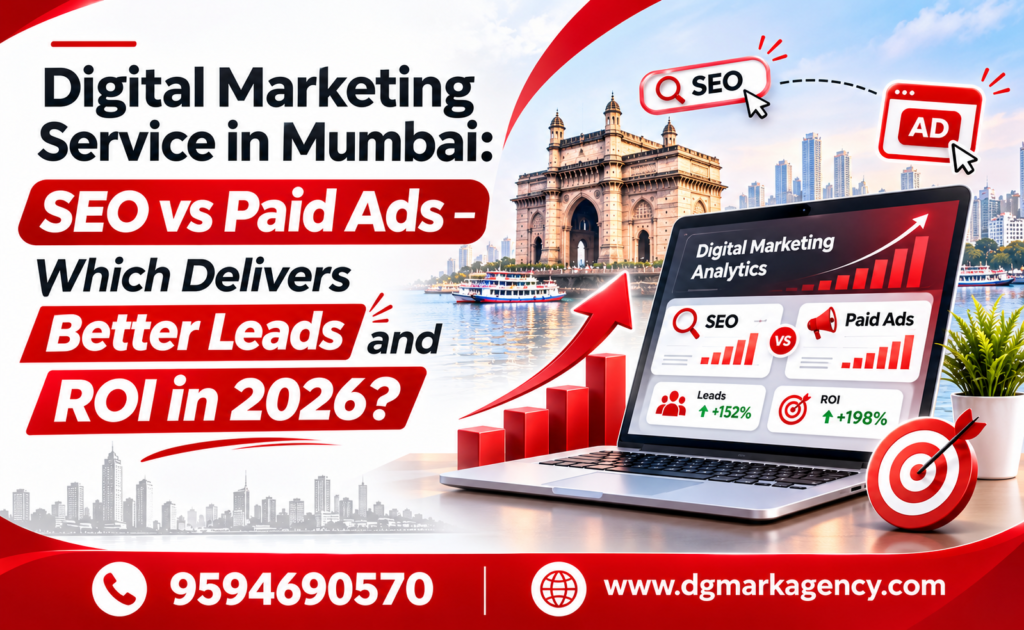
One of the most common questions among business owners is whether SEO or paid advertising delivers better leads and return on investment. Search Engine Optimization helps websites gain visibility through organic search results, while paid advertising allows companies to reach targeted audiences through Google Ads, Facebook Ads, and Instagram Ads. Both approaches can generate business opportunities, but they operate differently and serve different marketing objectives.
For companies searching for a digital marketing company in Mumbai, understanding how these strategies influence customer acquisition is essential. Investing in digital marketing without clear objectives can result in increased traffic without meaningful conversions. Businesses must identify which platforms attract genuine prospects, which activities support long-term visibility, and how marketing performance contributes to revenue.
In 2026, artificial intelligence, mobile search, local business discovery, and changing advertising technologies are influencing the way people find and evaluate businesses. Companies must therefore develop marketing strategies that address customer expectations while maintaining measurable performance.
DGmark Agency provides SEO, paid advertising, social media marketing, and website development services to support businesses seeking stronger online visibility and better customer engagement. This guide explains how SEO and paid advertising compare, which strategy suits different business requirements, and how Mumbai businesses can combine both approaches for sustainable growth.
What Is the Difference Between SEO and Paid Ads in Digital Marketing?
SEO and paid advertising are different approaches to improving digital visibility and attracting potential customers. SEO involves optimizing website content, technical structure, and search relevance so search engines can better understand and display relevant pages in organic results. Paid advertising allows businesses to promote their services through sponsored placements that appear according to selected keywords, audiences, locations, and campaign objectives. Although both strategies aim to attract relevant visitors, they differ in their visibility mechanisms, management requirements, and performance timelines.
The major differences include:
- Traffic source: SEO attracts visitors through unpaid search listings, while paid campaigns generate visits through sponsored advertisements.
- Visibility timeline: Organic improvements generally develop over time, while paid advertisements can begin appearing after approval.
- Targeting approach: SEO focuses on matching search intent, whereas advertising offers additional audience and geographic controls.
- Content requirements: SEO depends on useful website content, while advertisements require persuasive messages and relevant landing pages.
- Long-term potential: Optimized pages may continue attracting customers, while paid visibility usually requires ongoing investment.
- Performance flexibility: Paid campaigns offer more immediate control over promotional targeting and messaging.
- Measurement: Both approaches should be assessed through qualified enquiries, conversions, and customer acquisition.
For Mumbai businesses, understanding these distinctions helps identify which strategy aligns with immediate objectives and future growth plans. SEO strengthens organic discovery, while advertising can create opportunities to reach audiences during specific promotional periods or purchasing situations.
SEO vs Paid Ads: Which Is Better for Mumbai Businesses in 2026?
The most effective strategy depends on the business’s market position, customer requirements, competitive environment, and sales objectives. Mumbai businesses operate across diverse industries, including education, healthcare, real estate, manufacturing, hospitality, and professional services. Their customers do not follow identical purchasing journeys. Some people actively search for specific solutions, while others discover services through recommendations, social media, and promotional content. Consequently, businesses should select marketing channels according to how their customers research and purchase.
Important considerations include:
- Business stage: New companies may prioritize visibility and initial enquiries, while established businesses may strengthen organic authority.
- Customer intent: Search-driven services can benefit from SEO and targeted Google Search campaigns.
- Competitive conditions: Highly competitive industries require careful keyword selection and promotional differentiation.
- Sales cycle: Complex purchases may require informative content and repeated customer engagement.
- Website readiness: Both strategies perform better when landing pages communicate value clearly.
- Marketing objectives: Immediate lead generation and long-term brand visibility may require different priorities.
- Performance data: Actual customer acquisitions should influence channel selection.
For businesses operating in Andheri, Borivali, Goregaon, Bandra, and other commercial areas of Mumbai, a balanced approach can be valuable. SEO and paid advertising should not be treated as competing investments when both can contribute to reaching relevant customers.
How Does SEO Help Mumbai Businesses Generate Organic Traffic and Quality Leads?
Search Engine Optimization helps businesses reach people who actively search for information, products, or services online. By improving the relevance and accessibility of website pages, businesses can increase opportunities to appear in organic search results for meaningful customer queries. For example, a company supplying industrial equipment can publish detailed product pages, technical information, and service descriptions that answer questions from procurement professionals. This approach can attract visitors who already have a specific requirement and are evaluating potential suppliers.
Effective SEO activities include:
- Search intent research: Understand the information customers need before choosing a provider.
- On-page optimization: Improve website titles, headings, descriptions, and content organization.
- Technical improvements: Support efficient crawling, indexing, mobile usability, and page performance.
- Local relevance: Develop accurate content for the locations and communities genuinely served.
- Informational content: Publish guides, comparisons, and answers to customer questions.
- Service-page development: Explain offerings, applications, and customer benefits clearly.
- Conversion optimization: Provide accessible contact forms and relevant calls to action.
- Performance monitoring: Evaluate organic visibility, engagement, and qualified enquiries.
SEO becomes more valuable when businesses focus on attracting relevant visitors rather than pursuing traffic without commercial purpose. Useful content can support customer understanding, improve brand credibility, and create opportunities for enquiries throughout the buying journey.
How Do Google Ads and Meta Ads Help Businesses Generate Leads Faster?
Google Ads and Meta Ads allow businesses to promote their services through targeted advertising campaigns. Google Search advertisements can reach people who are actively searching for particular products or services, making them useful for capturing existing demand. Meta advertising, including Facebook and Instagram campaigns, can introduce businesses to potential customers through engaging visuals, promotional messages, and audience targeting. Both platforms can support lead generation when advertising content aligns with genuine customer requirements.
Paid campaigns provide several advantages:
- Immediate exposure: Approved campaigns can begin reaching eligible users without waiting for organic ranking improvements.
- Keyword targeting: Google Search campaigns can focus on commercially relevant queries.
- Location targeting: Businesses can prioritize appropriate areas within Mumbai.
- Audience discovery: Meta campaigns can introduce products and services to selected audiences.
- Visual communication: Images and videos help demonstrate products, facilities, and experiences.
- Lead collection: Campaigns can encourage calls, messages, enquiries, or form submissions.
- Creative testing: Advertisers can evaluate different offers and promotional messages.
- Conversion optimization: Performance data can guide campaign improvements.
For instance, a real estate company may use Google Ads to reach people searching for properties in specific Mumbai locations while promoting project information through Instagram. However, faster exposure does not guarantee profitable results. Campaign effectiveness depends on audience relevance, customer intent, landing-page quality, and the ability to convert enquiries into sales.
SEO vs PPC: Which Digital Marketing Strategy Delivers Better ROI in 2026?
Return on investment helps businesses determine whether marketing activities create sufficient financial value to justify their resources. SEO may deliver attractive long-term returns when informative and well-optimized pages continue attracting relevant visitors. PPC campaigns can generate opportunities sooner by targeting commercially valuable searches and audiences. Nevertheless, neither strategy consistently delivers better returns for every industry. Performance depends on competition, service value, customer acquisition efficiency, and conversion quality.
Businesses should measure the following indicators:
- Qualified enquiries: Leads that closely match the target customer profile.
- Customer acquisition: The number of paying customers generated through marketing.
- Conversion efficiency: The proportion of visitors who complete meaningful actions.
- Marketing profitability: The financial contribution associated with campaign activities.
- Customer lifetime value: The potential long-term value of acquired customers.
- Search visibility: Organic presence for relevant services and products.
- Campaign performance: Advertising results connected to enquiries and sales.
- Revenue attribution: The relationship between marketing interactions and completed purchases.
A campaign with impressive traffic statistics may still perform poorly if visitors do not become customers. Businesses should therefore evaluate profitability and customer acquisition outcomes when comparing SEO with paid advertising.
How Much Does SEO Cost Compared to Paid Advertising in Mumbai?
SEO and paid advertising require different resources because they involve distinct activities and ongoing management requirements. SEO focuses on website improvements, content development, keyword research, technical maintenance, and search performance evaluation. Paid advertising involves campaign planning, promotional creatives, targeting, advertising platform expenditure, and conversion optimization. The resources required depend on the business’s industry, website condition, competitive landscape, and marketing objectives rather than a universal pricing structure.
Factors influencing marketing investment include:
- Business requirements: Different industries need different levels of marketing support.
- Website condition: Technical issues and outdated pages may require improvements.
- Competitive keywords: Highly contested searches often demand more extensive planning.
- Geographic targeting: Campaigns serving multiple locations require additional coordination.
- Content development: Original and informative content supports organic search strategies.
- Advertising objectives: Awareness, enquiries, and sales campaigns involve different execution requirements.
- Conversion readiness: Effective landing pages and enquiry systems help improve results.
- Performance management: Both approaches require analysis and ongoing refinement.
Rather than focusing only on marketing expenses, businesses should consider the customer acquisition opportunities created by each activity. A digital marketing company in Mumbai can help identify priorities and develop an investment strategy aligned with measurable growth objectives.
Is SEO or Google Ads More Cost-Effective for Small Businesses and Startups?
For startups and small businesses, marketing effectiveness depends on how efficiently limited resources generate relevant customers. SEO can help establish a long-term digital foundation by improving service pages, local discoverability, and website content. Google Ads offers opportunities to test commercial demand and generate enquiries while organic visibility is still developing. The appropriate strategy depends on business maturity, existing demand, and the speed at which customer acquisition is required.
Small businesses should prioritize:
- Essential website optimization: Create informative pages explaining core services.
- High-intent keywords: Focus on specific searches related to customer requirements.
- Local visibility: Strengthen discoverability in genuine service areas.
- Focused advertising: Promote selected offerings instead of targeting overly broad audiences.
- Landing-page usability: Make information and enquiry options easy to access.
- Customer qualification: Identify whether leads match the intended market.
- Data-driven decisions: Adjust activities based on enquiry quality and conversions.
For a startup entering Mumbai’s competitive market, Google Ads can help validate demand while SEO develops the website’s long-term search presence. Businesses should evaluate the contribution of both strategies rather than assuming one is always more economical.
Which Generates More Qualified Leads: Organic SEO or Paid Advertising?
Qualified leads are potential customers with genuine requirements and a reasonable likelihood of purchasing. Both organic SEO and paid advertising can produce high-quality enquiries when the audience, message, and landing page are relevant. SEO may attract users researching specific solutions, while paid campaigns can reach people through carefully selected search terms or targeting criteria. Lead quality is therefore influenced by customer intent and conversion processes rather than the traffic source alone.
Important lead-quality factors include:
- Search relevance: Specific commercial queries can indicate purchasing interest.
- Audience suitability: Targeting should reflect the business’s ideal customers.
- Service clarity: Website visitors should understand the offering immediately.
- Landing-page relevance: Promotional messages should match the destination page.
- Enquiry qualification: Forms should collect information useful for sales follow-up.
- Customer response: Timely communication helps maintain interest.
- Sales tracking: CRM data can reveal which channels produce paying customers.
Businesses should avoid judging campaigns exclusively by the number of enquiries. A smaller group of suitable prospects may generate stronger commercial value than a large volume of unrelated leads. The objective is to attract customers who are genuinely interested in the business’s services.
How Long Does SEO Take to Show Results Compared to Google Ads?
SEO results usually develop progressively because search engines need to discover, assess, and rank website content. The timeline depends on website history, technical accessibility, keyword competition, and content quality. Google Ads can produce visibility sooner after campaigns are approved and activated, but successful advertising still requires ongoing optimization. Neither approach guarantees immediate customer acquisition, and performance should be evaluated through meaningful business outcomes.
The process generally includes:
- SEO evaluation: Identify website issues and search opportunities.
- Content improvement: Optimize service pages and customer-focused information.
- Technical maintenance: Address crawling, indexing, and usability problems.
- Organic tracking: Monitor relevant impressions, clicks, and enquiries.
- Advertising launch: Activate campaigns with suitable targeting.
- Campaign assessment: Review customer actions and conversion data.
- Optimization: Improve targeting, advertisements, and landing-page performance.
Businesses requiring immediate enquiries may prioritize advertising while developing SEO simultaneously. This allows short-term promotional activities to support customer acquisition while organic visibility strengthens over time.
Google Ads vs Meta Ads: Which Platform Is Better for Lead Generation in Mumbai?
Google Ads and Meta Ads support different customer behaviours. Google Search advertising is valuable when users actively look for specific services, while Facebook and Instagram campaigns can introduce businesses to people who may not yet be searching. The most appropriate platform depends on whether the business is capturing existing demand or developing interest through visual and promotional communication.
Key considerations include:
- Search-driven demand: Google Search ads can reach people expressing immediate service requirements.
- Audience awareness: Meta campaigns can introduce brands and offerings to potential customers.
- Advertising formats: Google supports search-focused placements, while Meta emphasizes social and visual content.
- Customer journey: Complex purchases may require multiple interactions before conversion.
- Geographic targeting: Both platforms provide tools to reach selected markets.
- Campaign measurement: Lead qualification and sales outcomes reveal channel effectiveness.
- Creative relevance: Advertisements should communicate customer benefits clearly.
For Mumbai businesses, platform selection should reflect actual audience behaviour. Some industries may perform better through search advertising, while others may benefit from combining search-based enquiries with social media audience development.
Should Mumbai Businesses Invest in Local SEO or Google Ads for Local Customers?
Businesses serving particular Mumbai neighbourhoods can benefit from both local SEO and geographically targeted advertising. Local SEO improves discoverability through accurate business information, relevant service pages, and Google Business Profile optimization. Google Ads enables companies to promote services to audiences in selected locations. Both approaches can support customer acquisition when targeting reflects the areas a business genuinely serves.
Effective local marketing practices include:
- Accurate business information: Maintain consistent names, contact details, and service information.
- Google Business Profile: Keep relevant business information complete and current where eligible.
- Location-focused pages: Explain genuine service availability across relevant areas.
- Local search terms: Address common customer searches connected to nearby services.
- Reviews: Encourage authentic customer feedback.
- Mobile experience: Make contact options accessible to mobile users.
- Geographic advertising: Reach suitable audiences within selected locations.
- Local enquiry tracking: Evaluate which areas generate meaningful leads.
A business operating in Andheri or Borivali should prioritize genuine customer requirements rather than publishing repetitive neighbourhood pages. Combining accurate local information with targeted advertising can create additional opportunities to connect with nearby customers.
What Are the Advantages and Disadvantages of SEO vs Paid Advertising?
SEO and paid advertising each offer distinct advantages and limitations. SEO creates opportunities for organic discoverability, customer education, and long-term search visibility. However, it requires sustained improvements and rankings may fluctuate. Paid advertising provides greater campaign flexibility and potentially faster promotional exposure, but ongoing visibility generally depends on continued advertising investment. Businesses should understand these trade-offs before allocating marketing resources.
Important considerations include:
- SEO benefit: Relevant pages can attract organic visitors over time.
- SEO benefit: Informative content supports customer research and brand credibility.
- SEO limitation: Competitive keywords may require significant ongoing effort.
- SEO limitation: Search rankings are not guaranteed.
- Paid advertising benefit: Campaigns can be activated for immediate promotional needs.
- Paid advertising benefit: Targeting and messaging can be adjusted based on performance.
- Paid advertising limitation: Inefficient targeting may produce irrelevant traffic.
- Paid advertising limitation: Visibility commonly decreases when campaigns stop.
The appropriate combination depends on business objectives and customer acquisition economics. A balanced strategy can reduce dependence on a single channel while supporting different stages of the customer journey.
How Can Businesses Measure ROI from SEO and Paid Advertising Campaigns?
Measuring digital marketing performance requires connecting online activities with commercial results. Rankings, impressions, and website visits can indicate visibility, but business owners should also monitor enquiries, conversions, customers, and revenue. SEO and paid campaigns can be evaluated using website analytics, advertising reports, and customer relationship management systems. Consistent measurement helps businesses identify activities that contribute to profitable growth.
Useful performance indicators include:
- Organic conversions: Valuable actions originating from unpaid search traffic.
- Paid conversions: Enquiries and purchases associated with advertisements.
- Qualified lead rate: The proportion of enquiries matching customer requirements.
- Customer acquisition cost: Resources required to acquire paying customers.
- Sales conversion: The percentage of enquiries becoming customers.
- Return on ad spend: Revenue attributed to advertising relative to ad expenditure.
- Marketing ROI: Financial return compared with associated investment.
- Customer lifetime value: The estimated contribution from an acquired customer.
Businesses should evaluate these metrics together rather than relying on isolated statistics. Connecting marketing data with sales outcomes helps identify which channels deserve further optimization and investment.
Can SEO and Paid Ads Work Together to Increase Leads and Conversions?
SEO and paid advertising can support each other by improving visibility at different stages of customer discovery. SEO develops informative pages that answer relevant questions, while paid campaigns provide opportunities to test commercial demand and reach targeted audiences. Businesses can use insights from both channels to refine keywords, messaging, landing pages, and conversion processes. A coordinated approach can also help maintain consistent brand communication.
Integration opportunities include:
- Shared keyword planning: Identify relevant terms for organic and paid campaigns.
- Landing-page optimization: Improve website content for all traffic sources.
- Search intent mapping: Address informational, comparison, and purchasing queries.
- Paid campaign insights: Use conversion data to prioritize valuable SEO topics.
- Organic performance analysis: Identify search themes that may justify additional promotion.
- Remarketing: Reconnect with eligible audiences through relevant advertisements.
- Consistent brand messaging: Maintain clear positioning across channels.
- Unified reporting: Compare qualified leads and customer acquisition outcomes.
For example, a professional service company can develop informative SEO articles while running Google Ads for commercially focused searches. These strategies can help customers discover the business, compare solutions, and make informed enquiries.
How Are AI Search, AEO, and GEO Changing SEO and Paid Advertising in 2026?
Artificial intelligence is changing how users access information and compare businesses online. AI-assisted search experiences can summarize relevant information and help users explore complex queries. This has increased attention toward Answer Engine Optimization, Generative Engine Optimization, and AI-oriented optimization. These approaches emphasize creating understandable, accurate, and useful content that addresses customer questions directly. However, conventional SEO principles remain important for organic discoverability.
Businesses can adapt through:
- Question-based headings: Organize content around customer information needs.
- Clear answers: Explain services and concepts in direct language.
- Original expertise: Include accurate information supported by real business knowledge.
- Structured content: Use meaningful headings and logical topic organization.
- Local context: Clearly explain genuine service locations.
- Technical accessibility: Maintain crawlable and well-organized websites.
- Content accuracy: Review important claims and business information regularly.
- Trust signals: Provide transparent descriptions of services and business operations.
AEO and GEO should strengthen useful content rather than replace established SEO practices. Businesses should avoid assuming that AI-related techniques guarantee inclusion in generated answers. Accurate information and relevance remain central to digital visibility.
How Should Mumbai Businesses Divide Their Digital Marketing Budget Between SEO and Paid Ads?
Marketing resource allocation should reflect business goals, existing digital performance, and customer acquisition opportunities. A newly established company may require paid advertising to develop initial visibility, while an established business may prioritize strengthening organic content and search presence. There is no universal distribution suitable for every Mumbai business because industries, customer values, and marketing requirements differ.
Important planning factors include:
- Immediate business needs: Identify whether rapid enquiries are essential.
- Existing search visibility: Evaluate organic rankings and relevant website traffic.
- Advertising performance: Review conversion quality and customer acquisition.
- Industry competition: Understand difficulty across organic and paid channels.
- Customer purchasing behaviour: Consider how audiences research services.
- Website conversion readiness: Ensure pages support meaningful enquiries.
- Profitability: Prioritize marketing activities linked to commercial value.
- Regular reviews: Adjust resource allocation using reliable performance data.
A digital marketing company in Mumbai can help businesses evaluate these factors and develop a strategy suited to their growth objectives. Resource allocation should be based on measurable opportunities rather than arbitrary percentages.
How Do You Choose the Right Digital Marketing Agency in Mumbai for SEO and Paid Ads?
Selecting a digital marketing agency requires evaluating its understanding of business goals, customer behaviour, search visibility, and campaign performance. A capable agency should explain how different marketing activities contribute to enquiries and customer acquisition. It should also provide realistic expectations, transparent communication, and meaningful reporting. Businesses should avoid relying solely on promotional promises or guaranteed ranking claims when choosing a marketing partner.
Important evaluation criteria include:
- SEO capabilities: Technical optimization, content strategy, and local search knowledge.
- Advertising experience: Google Ads and Meta campaign management.
- Strategic understanding: Recommendations based on business objectives.
- Website expertise: Landing-page usability and conversion optimization.
- Data reporting: Clear information about enquiries, customers, and performance.
- Industry relevance: Understanding of customer needs within the business sector.
- Communication: Transparent explanations of ongoing activities.
- Integrated services: Coordination between organic and paid marketing.
The appropriate agency should help businesses make informed decisions about customer acquisition rather than focusing only on website traffic. Strong strategic planning and consistent performance evaluation can support long-term marketing effectiveness.
Why Choose DGmark Agency for SEO, Paid Advertising, and Lead Generation Services in Mumbai?
DGmark Agency provides digital marketing services designed to support online visibility, brand communication, and customer acquisition. As a digital marketing company in Mumbai, DGmark Agency offers SEO, Google Ads, social media marketing, and website development solutions. These services allow businesses to explore coordinated organic and paid marketing strategies based on their target audiences and commercial objectives.
DGmark Agency’s services include:
- Search Engine Optimization: Improving website relevance, technical accessibility, and organic visibility.
- Local SEO: Supporting discoverability for relevant Mumbai-based searches.
- Google Ads: Promoting services through targeted search advertising.
- Meta Ads: Reaching audiences through Facebook and Instagram campaigns.
- Social Media Marketing: Supporting brand awareness and customer engagement.
- Website Development: Creating accessible digital experiences for visitors.
- Content Marketing: Publishing useful service information and educational resources.
- Lead Generation: Developing campaigns intended to attract relevant enquiries.
- Performance Review: Using marketing data to identify optimization opportunities.
DGmark Agency’s range of services can help businesses coordinate search visibility, paid advertising, and website experience within a broader marketing strategy. For companies seeking relevant leads and stronger digital positioning, the agency offers solutions that can be aligned with different stages of business growth.
Frequently Asked Questions (FAQs)
1. Is SEO better than Google Ads for businesses in Mumbai?
SEO is useful for building long-term organic visibility, while Google Ads can reach relevant search audiences sooner. The better strategy depends on how quickly the business needs enquiries, the level of competition, and customer acquisition performance.
2. Which strategy generates more qualified leads, SEO or paid ads?
Both can generate qualified leads when keywords, targeting, content, and landing pages match customer needs. Businesses should compare enquiries that become paying customers rather than judging success solely by lead volume.
3. Can small businesses grow online without paid advertising?
Yes. Small businesses can build visibility through SEO, informative content, local business optimization, and relevant service pages. However, organic discovery takes effort and cannot guarantee a particular volume of leads.
4. How does local SEO help Mumbai businesses attract customers?
Local SEO improves a business’s relevance to location-based searches. Accurate business details, useful local content, and an optimized Google Business Profile can help potential customers discover services in relevant areas.
5. Do paid advertisements improve organic rankings?
No. Advertising does not directly improve organic search rankings. However, paid campaigns can provide useful insights into customer queries, promotional messages, and conversion opportunities that can inform SEO planning.
6. Is PPC suitable for startups in 2026?
PPC can help startups test demand and reach commercially relevant audiences. Successful results depend on targeting accuracy, landing-page quality, conversion tracking, and the ability to turn enquiries into customers.
7. How can businesses measure SEO and paid advertising ROI?
Businesses should compare attributable profit with marketing investment while tracking qualified enquiries, customer acquisition, conversion rates, and revenue. Analytics and CRM systems can help connect online interactions with sales.
8. Should businesses use SEO and Meta Ads together?
Combining SEO and Meta Ads can be useful when organic search and social discovery support different customer needs. SEO addresses search demand, while Meta campaigns can introduce offerings to selected audiences.
9. Will AI search replace traditional SEO?
AI search is changing information discovery, but traditional SEO fundamentals remain relevant. Useful content, technical accessibility, accurate business information, and clear service explanations continue to support search visibility.
10. Why choose DGmark Agency for digital marketing services in Mumbai?
DGmark Agency offers SEO, Google Ads, social media marketing, and website development services. These capabilities can support businesses seeking coordinated strategies for online visibility, relevant customer enquiries, and digital growth.
Conclusion
SEO vs Paid Ads remains an important decision for Mumbai businesses seeking more relevant leads and improved marketing returns in 2026. SEO supports organic discoverability, informative content, and long-term customer acquisition opportunities, while paid advertising provides targeted promotional visibility and faster campaign testing. Businesses should evaluate both channels according to customer intent, conversion performance, and profitability instead of focusing exclusively on traffic or impressions.
DGmark Agency helps businesses explore integrated digital marketing strategies through SEO, Google Ads, Meta advertising, and website development. As a digital marketing company in Mumbai, DGmark Agency supports companies looking to improve online visibility and develop meaningful customer acquisition opportunities. By coordinating organic search efforts with targeted advertising and measurable performance analysis, businesses can establish a stronger foundation for sustainable digital growth.
Contact DGmark Agency Today!
DGmark Agency – Best Digital Marketing Agency in Andheri, Mumbai
Address– 405, 4th Floor, Pratik, Ratan Nagar Apartment-B Wing, Bus Stop, Near, Apna Bazar Rd, opp. Dhake Colony, D.N.Nagar, Andheri West, Mumbai, Maharashtra 400053
Phone no. – 9594690570
Website: https://dgmarkagency.com/