
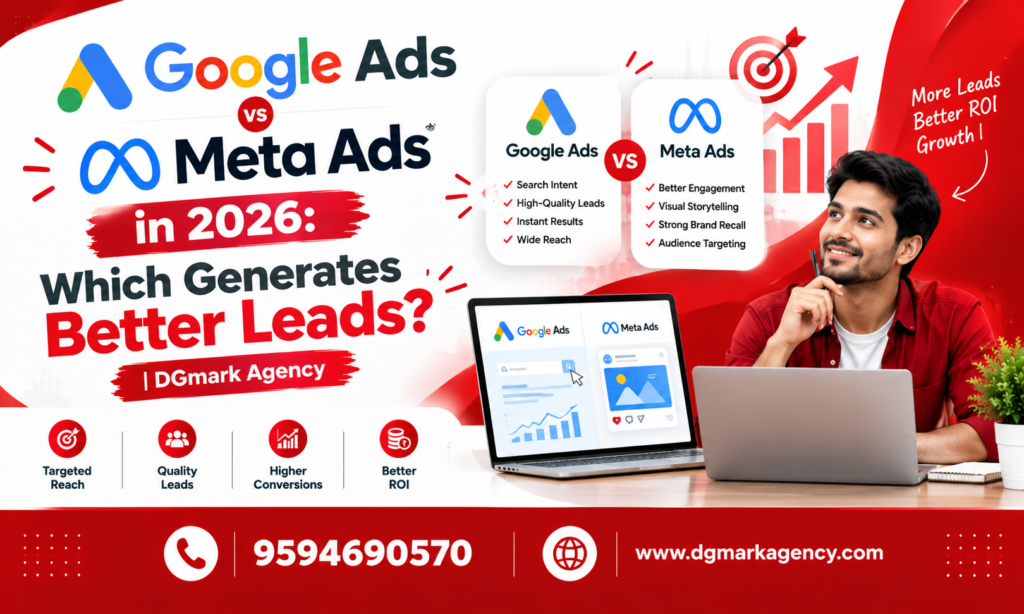
Introduction
In 2026, businesses are investing in paid digital advertising to reach potential customers, increase enquiries, and improve sales opportunities. However, choosing the right advertising platform has become an important decision, especially for small businesses operating with limited marketing budgets. Google Ads and Meta Ads are two widely used advertising platforms that help businesses connect with customers through different targeting methods and campaign formats. While Google Ads can reach people actively searching for products or services, Meta Ads allows businesses to introduce their offerings through Facebook, Instagram, and other eligible advertising placements.
The comparison between Google Ads vs Meta Ads involves more than advertising costs or the number of leads generated. Businesses need to consider customer purchasing intent, audience behaviour, advertising objectives, conversion rates, and the financial value of acquired customers. A campaign generating inexpensive enquiries may appear successful, but those leads provide limited value if they do not result in genuine sales opportunities. Understanding how both advertising platforms work helps businesses choose suitable strategies and allocate their budgets more effectively.
DGmark Agency, a digital marketing company in Mumbai, provides Google Ads management, Facebook and Instagram advertising, SEO, website development, and other digital marketing services. These solutions can support businesses seeking to improve online visibility and customer acquisition. This guide compares Google Ads and Meta Ads in 2026, covering lead quality, advertising costs, targeting methods, ROI, AI-powered campaign management, and strategies for businesses targeting Mumbai, Andheri, and Borivali.
What Is the Difference Between Google Ads and Meta Ads in 2026?
The primary difference between Google Ads and Meta Ads is how advertisements reach potential customers. Google Search Ads connect businesses with users actively searching for information, products, or services. Meta Ads generally reach audiences while they browse Facebook, Instagram, and other eligible placements. Google Ads can capture existing customer demand, while Meta Ads can help generate awareness and interest among people who may not be actively searching for an offering.
Key Differences Between Google Ads and Meta Ads
- Customer intent: Google Search frequently reaches users with an existing requirement.
- Audience discovery: Meta advertising can introduce products and services to potential customers.
- Advertising formats: Google supports Search, Video, Shopping, Display, and other campaign types.
- Visual engagement: Meta supports images, Reels, Stories, carousel advertisements, and videos.
- Targeting: Google uses search queries and other signals; Meta relies on eligible audience and engagement signals.
- Lead generation: Both platforms support customer enquiries and conversion-focused campaigns.
The better platform depends on the customer journey. Businesses offering services with established search demand may benefit from Google Search advertising, while products requiring demonstrations may perform well through Meta’s visual placements. Both platforms can contribute to customer acquisition when campaigns are properly managed.
How Do Google Ads and Meta Ads Work for Small Business Lead Generation?
Google Ads and Meta Ads provide different methods for attracting potential customers and encouraging enquiries. Google Search campaigns appear in response to relevant search queries, while Meta campaigns can promote offerings through advertisements displayed during social media browsing. Both platforms support various conversion opportunities, including website enquiries, appointment requests, and eligible lead forms. Effective lead generation depends on aligning advertising objectives with customer behaviour.
Lead Generation Methods Used by Both Platforms
- Search advertising: Google Ads reaches users searching for relevant services.
- Instant lead forms: Meta Ads can collect enquiries directly within supported platform experiences.
- Website traffic: Both platforms can direct visitors to relevant landing pages.
- Call enquiries: Eligible Google campaigns can encourage telephone enquiries.
- Messaging campaigns: Meta supports conversations through eligible messaging destinations.
- Conversion optimisation: Automated delivery can focus on selected customer actions.
For small businesses, generating leads requires more than receiving contact details. Enquiries should be relevant to the offered service, within the business’s target market, and supported by a reliable follow-up process. Choosing the correct campaign format can help businesses attract customers at appropriate stages of the purchasing journey.
Google Ads vs Meta Ads: Which Platform Generates More Quality Leads?
Lead quality depends on how closely a potential customer’s needs match the advertised offering and whether that person is prepared to purchase. Google Search Ads may attract high-intent customers because users express their requirements through searches. Meta Ads can generate relevant prospects through engaging advertisements and carefully selected conversion objectives. However, neither platform guarantees better-quality enquiries in every industry.
Factors That Determine Lead Quality
- Purchasing intent: Whether the customer is actively considering a purchase.
- Service relevance: How closely the offering matches customer requirements.
- Customer location: Whether the business can serve the prospect.
- Lead qualification: Whether the enquiry includes useful purchasing information.
- Contact accuracy: Whether the business can successfully reach the customer.
- Sales progression: Whether the enquiry becomes a genuine business opportunity.
Businesses should compare qualified leads rather than total enquiries alone. A Google campaign producing fewer enquiries may be more valuable if those prospects frequently become customers. Similarly, a Meta campaign can provide strong results when advertisements reach suitable audiences. The most reliable comparison considers qualified lead-to-customer conversion rates and acquisition costs.
Which Is Better for Small Businesses: Google Ads or Facebook Ads?
Choosing between Google Ads and Facebook Ads requires understanding where customers discover and evaluate business offerings. Google Ads can be suitable for services people intentionally search for, while Facebook Ads can help businesses attract attention through visual content, educational messages, and product demonstrations. Small businesses should evaluate their industry, customer behaviour, and marketing objectives before selecting a platform.
Business Categories and Suitable Advertising Approaches
- Professional services: Google Search may capture customers actively comparing providers.
- Fashion and lifestyle: Facebook and Instagram can demonstrate products visually.
- Educational institutes: Both platforms can support course enquiries and awareness.
- Real estate: Search advertisements and visual property campaigns may complement each other.
- Local home services: Google Search can reach customers seeking immediate assistance.
- New product launches: Meta can help introduce unfamiliar offerings.
- E-commerce: Platform selection depends on product demand and profitability.
Businesses should avoid choosing Facebook or Google simply because another company reports good results. Campaign suitability depends on customer needs, creative quality, available budgets, and conversion performance. A focused strategy aligned with purchasing behaviour is more important than advertising on every platform.
Google Ads vs Meta Ads: Which Platform Is More Cost-Effective in 2026?
Advertising cost-effectiveness involves understanding how much a business spends to acquire commercially valuable customers. Meta campaigns may produce lower initial enquiry costs in some situations, while Google Search campaigns can attract users with stronger purchasing intent. However, inexpensive leads do not automatically produce higher profitability. Businesses should examine customer acquisition costs, conversion rates, and sales revenue when comparing platforms.
Factors Influencing Advertising Costs
- Industry competition: Demand from competing advertisers affects auction costs.
- Target audience: Different customer segments may involve different acquisition expenses.
- Advertisement relevance: Accurate messaging helps reach suitable prospects.
- Creative quality: Effective visuals and copy can improve engagement.
- Landing page performance: Website usability influences conversion outcomes.
- Sales conversion rate: Lead quality determines the eventual value of advertising expenditure.
The most cost-effective platform is the one that helps a business acquire suitable customers within an acceptable financial range. Google Ads and Meta Ads should therefore be compared through qualified cost per lead and customer acquisition cost, not simply cost per click or initial enquiry volume.
How Much Should Small Businesses Spend on Google Ads vs Meta Ads?
Small businesses should plan advertising budgets according to their objectives, financial capacity, industry competition, and expected customer value. There is no universal amount that guarantees lead generation success. A service business targeting high-intent searches may require a different spending approach from a consumer brand promoting visually attractive products through social media. Effective budget planning should provide enough resources for useful testing while maintaining financial control.
Important Advertising Budget Considerations
- Customer acquisition goals: Define the number and type of enquiries required.
- Market competition: Research advertising demand within the selected industry.
- Target locations: Consider whether campaigns serve local or wider markets.
- Expected customer value: Understand how much revenue a new customer may generate.
- Creative requirements: Account for advertisements, videos, and landing pages.
- Testing capacity: Allow resources to evaluate campaign performance.
- Management expenses: Consider advertising and professional management costs separately.
Rather than dividing budgets equally, businesses should prioritise the platform best aligned with customer demand. Spending can be adjusted as reliable performance information becomes available. Campaign expansion should depend on qualified leads and customer acquisition results rather than advertising impressions alone.
What Is the Average Cost Per Lead for Google Ads vs Meta Ads in India?
The average cost per lead for Google Ads and Meta Ads in India varies according to industry, advertising format, geographical targeting, and campaign performance. Competitive services may experience higher acquisition costs than products with broader consumer demand. Google Search Ads can involve relatively expensive commercial keywords, while Meta lead forms may sometimes produce less costly enquiries. However, raw lead costs do not reveal whether prospects become paying customers.
Factors Affecting Cost Per Lead in India
- Industry: Education, real estate, healthcare, and professional services have different acquisition requirements.
- Location: Advertising competition varies across Mumbai and other Indian markets.
- Keyword demand: High-intent searches can involve greater bidding competition.
- Campaign objective: Traffic and lead generation campaigns optimise for different actions.
- Lead qualification: More selective forms may reduce volume while improving relevance.
- Landing page performance: Conversion barriers can increase acquisition costs.
- Customer readiness: Purchase intent influences eventual sales performance.
Businesses should avoid relying on generalised market averages when determining suitable advertising budgets. Actual campaign data provides a more reliable benchmark. Comparing raw CPL with qualified CPL helps determine whether a platform generates enquiries that justify the cost of advertising.
Which Platform Delivers Better ROI: Google Ads or Meta Ads?
Return on investment measures whether advertising generates sufficient financial value relative to its costs. Google Ads may deliver strong results when it captures existing search demand, while Meta Ads can contribute to revenue by introducing products and engaging potential customers. Neither platform consistently provides higher returns across every business category. ROI depends on customer value, conversion performance, acquisition expenses, and the effectiveness of the sales process.
Important Advertising ROI Metrics
- Cost per lead: Measures advertising spending per generated enquiry.
- Qualified cost per lead: Evaluates spending on commercially relevant prospects.
- Lead-to-customer rate: Measures how many enquiries become customers.
- Customer acquisition cost: Calculates total relevant expenditure per acquired customer.
- Return on ad spend: Compares advertising-attributed revenue with ad spending.
- Return on investment: Evaluates net financial returns after relevant costs.
- Customer lifetime value: Considers revenue from ongoing customer relationships.
Businesses should also account for customers interacting with multiple platforms before purchasing. Someone may discover a product through Instagram before searching for it on Google. Connecting advertising information with sales records helps create a more reliable understanding of financial performance.
How Does Audience Targeting Differ Between Google Ads and Meta Ads?
Google Ads and Meta Ads use different combinations of information to help advertisers reach potential customers. Google Search advertising can respond directly to relevant queries, making search intent an important targeting factor. Meta advertising relies more heavily on eligible audience characteristics, engagement behaviour, creative relevance, and automated delivery systems. These differences influence how businesses approach customer discovery and conversion campaigns.
Key Audience Targeting Differences
- Search keywords: Google Search can target relevant customer queries.
- Audience discovery: Meta can introduce offerings through eligible audience delivery.
- Geographical targeting: Both platforms provide location-related settings.
- Customer information: Eligible first-party data can support targeting and measurement.
- Engagement audiences: Meta can reconnect with certain previously engaged users.
- Remarketing: Both platforms offer eligible methods for re-engaging audiences.
- Automation: Machine learning supports advertising delivery on both platforms.
Businesses should understand whether their ideal customers are actively searching or more likely to respond to visual discovery. Privacy requirements and platform policies must also be considered. Combining customer research with reliable conversion information helps advertisers select relevant targeting approaches.
Which Platform Is Better for High-Intent Leads: Google Ads or Meta Ads?
High-intent leads are prospective customers who demonstrate a clear need and a reasonable likelihood of purchasing. Google Search campaigns can be useful for these enquiries because customers may search for specific services, prices, quotations, or nearby providers. Meta Ads can also attract interested prospects, particularly through relevant campaigns and engaged audiences, but customer intent may require additional qualification.
Indicators of High-Intent Leads
- Specific customer requirements: The prospect understands the service they need.
- Relevant purchasing searches: Search terms suggest commercial interest.
- Suitable geographical location: The business can serve the customer.
- Clear buying timeline: The prospect has a realistic decision-making period.
- Qualified enquiry information: Contact details and requirements are usable.
- Sales engagement: The customer responds to relevant follow-up.
- Conversion potential: The enquiry progresses towards a purchase.
Businesses should determine lead quality through actual customer behaviour rather than assumptions about the platform. Google Search may capture more immediate demand, while Meta can help develop interest among relevant audiences. Both can support high-intent acquisition when managed with appropriate objectives and qualification processes.
Google Search Ads vs Facebook Lead Ads: Which Converts Better?
Google Search Ads and Facebook Lead Ads offer different customer enquiry experiences. Google Search campaigns can reach customers who actively express requirements through search queries, while Facebook Lead Ads allow users to submit information through eligible instant forms. These forms can simplify the enquiry process, but easier submissions may include prospects who are not yet ready to purchase. Conversion quality therefore matters more than form completion volume.
Important Conversion Factors
- Search intent: Whether the customer is actively seeking a solution.
- Form convenience: How easily users can submit their information.
- Landing page relevance: Whether the destination matches customer expectations.
- Lead qualification: Whether submitted information indicates genuine interest.
- Contact accuracy: Whether the prospect can be reached successfully.
- Sales response: How quickly enquiries receive follow-up.
- Customer conversion: Whether enquiries result in actual sales.
Businesses should compare the percentage of qualified enquiries that become customers. A higher form completion rate does not always indicate better advertising performance. The most effective campaign is the one that generates commercially useful leads at a sustainable acquisition cost.
Why Are Your Google Ads and Meta Ads Generating Clicks but No Leads?
Paid advertising campaigns may receive clicks without generating enquiries when customer targeting, advertisement messaging, or conversion experiences are ineffective. Google campaigns can attract unrelated searches when targeting is too broad, while Meta campaigns may generate curiosity without purchasing intent. Slow websites, unclear service information, complicated contact forms, and tracking errors can also prevent meaningful conversions.
Common Reasons Advertisements Fail to Convert
- Incorrect campaign goals: Campaigns optimise for traffic instead of relevant conversions.
- Unsuitable targeting: Advertisements reach customers outside the intended market.
- Weak advertisement messaging: Offers are unclear or attract unrelated interest.
- Landing page mismatch: Website information differs from advertising promises.
- Complex enquiry forms: Excessive questions discourage submissions.
- Poor mobile experience: Contact options are difficult to use.
- Conversion tracking problems: Customer actions may not be recorded correctly.
- Delayed follow-up: Interested prospects lose interest before receiving a response.
Businesses should investigate these problems before increasing advertising expenditure. Reviewing search terms, testing forms, validating tracking, and checking website usability can reveal conversion barriers. Targeted improvements based on evidence can help turn relevant traffic into meaningful enquiries.
How Can Businesses Improve Lead Quality on Google Ads and Meta Ads?
Improving lead quality requires aligning advertisements with customer needs and creating a reliable process for identifying suitable prospects. Businesses should clearly communicate their offerings, avoid misleading promotional messages, and collect enough information to evaluate customer requirements. Effective lead generation also depends on reviewing sales outcomes rather than treating every enquiry as equally valuable.
Strategies to Improve Lead Quality
- Define ideal customers: Identify relevant needs, locations, and purchasing considerations.
- Improve advertisement accuracy: Explain services and offers clearly.
- Refine keyword targeting: Reduce irrelevant searches on Google Ads.
- Evaluate audience signals: Improve Meta campaign relevance using available information.
- Use qualification questions: Collect essential customer details.
- Connect CRM information: Track leads through the sales process.
- Monitor qualified conversions: Measure actions associated with genuine opportunities.
- Improve follow-up: Respond consistently to prospective customers.
Businesses should review why certain enquiries fail to progress towards sales. This information can help improve targeting, advertising messages, and conversion objectives. When marketing and sales teams use the same lead qualification standards, campaign performance becomes easier to measure.
What Are the Most Common Google Ads vs Meta Ads Mistakes to Avoid?
Google Ads and Meta Ads campaigns can underperform when businesses make decisions without clear goals or sufficient performance information. A common mistake is prioritising website traffic or inexpensive enquiries without evaluating customer quality. Other problems include inaccurate targeting, unsuitable landing pages, weak advertising creative, and insufficient conversion measurement. These issues can increase expenditure while producing limited commercial value.
Common Paid Advertising Mistakes
- Unclear campaign objectives: Advertising without meaningful business goals.
- Incorrect targeting: Reaching audiences unrelated to the offering.
- Generic advertisements: Failing to communicate specific customer benefits.
- Ignoring landing pages: Sending visitors to unsuitable website destinations.
- Inaccurate tracking: Measuring actions that do not indicate customer value.
- Frequent campaign changes: Adjusting settings before collecting sufficient data.
- Creative fatigue: Continuing ineffective advertisements without reviewing performance.
- Focusing only on CPL: Ignoring qualified leads and sales results.
- Poor lead follow-up: Failing to respond to genuine enquiries.
Businesses should establish consistent campaign reviews and evaluate changes using reliable data. Avoiding these mistakes helps improve marketing efficiency and reduces unnecessary expenditure. The objective should be sustainable customer acquisition rather than temporary improvements in advertising metrics.
How Is AI Changing Google Ads and Meta Ads Lead Generation in 2026?
Artificial intelligence increasingly influences paid advertising through automated bidding, audience delivery, creative optimisation, and conversion prediction. Both Google and Meta use machine learning to identify advertising opportunities based on available signals. These tools can support efficient campaign management, but successful results still depend on accurate objectives, useful creative content, and reliable conversion tracking.
AI-Powered Advertising Capabilities
- Automated bidding: Supports bid decisions based on selected conversion goals.
- Audience optimisation: Helps identify relevant advertising delivery opportunities.
- Creative asset combinations: Tests eligible variations of advertisements.
- Conversion prediction: Estimates the likelihood of selected customer actions.
- Value-based optimisation: Supports campaigns using appropriate conversion values.
- Performance recommendations: Identifies potential campaign improvements.
- First-party data integration: Uses appropriately collected information for eligible measurement.
- Operational automation: Reduces some repetitive management responsibilities.
AI-powered campaigns should not operate without human evaluation. Automation may prioritise low-quality enquiries when conversion goals are poorly configured. Businesses should combine AI capabilities with customer qualification, accurate tracking, and regular analysis to ensure advertising decisions remain aligned with commercial objectives.
Google Performance Max vs Meta Advantage+: Which Is Better for Lead Generation?
Google Performance Max and Meta Advantage+ are automation-based advertising capabilities designed to support campaign delivery and optimisation. Performance Max can access eligible Google advertising channels through a conversion-focused campaign, while Meta Advantage+ features support automated delivery and optimisation within Meta’s advertising ecosystem. Their effectiveness depends on the customer’s purchasing journey, creative assets, conversion goals, and available performance data.
Important Performance Max vs Advantage+ Considerations
- Platform coverage: Google and Meta provide access to different advertising environments.
- Customer behaviour: Google can capture search demand alongside other interactions.
- Creative requirements: Both benefit from relevant advertisements and strong visual materials.
- Conversion objectives: Clear goals help automated systems optimise towards useful actions.
- Audience information: Eligible signals can support campaign delivery.
- Lead qualification: Sales outcomes help evaluate customer suitability.
- Performance monitoring: Regular reviews are necessary to assess results.
Neither automated advertising option guarantees better lead generation. Businesses should compare qualified enquiries, customer acquisition costs, and actual sales performance. Appropriate automation can support campaign management, but it should remain connected to business strategy and reliable measurement.
Which Is Better for Local Business Advertising in Mumbai: Google Ads or Meta Ads?
Local businesses in Mumbai should select advertising platforms according to customer behaviour, service coverage, and purchasing intentions. Google Search Ads may be useful for reaching people actively searching for nearby services, while Meta Ads can introduce businesses through Facebook and Instagram. Both platforms offer location-related targeting, but their effectiveness depends on how well advertisements reflect customer needs in the selected market.
Local Advertising Strategies for Mumbai Businesses
- Local search campaigns: Reach customers searching for relevant nearby services.
- Location-specific messaging: Communicate service availability in selected areas.
- Facebook and Instagram advertisements: Build awareness through relevant visuals.
- Mobile-friendly landing pages: Simplify enquiries from smartphone users.
- Clear contact information: Make business communication convenient.
- Call and enquiry tracking: Measure customer interactions accurately.
- Geographical performance analysis: Identify areas generating suitable enquiries.
Businesses seeking a digital marketing agency in Borivali may require campaigns focused on nearby customers and relevant service areas. Similarly, companies considering a digital marketing agency in Andheri should evaluate the provider’s understanding of local targeting. Mumbai businesses can benefit from campaigns that reflect their actual service coverage rather than relying on unnecessarily broad advertising.
Should Small Businesses Use Google Ads and Meta Ads Together?
Using Google Ads and Meta Ads together can help businesses engage customers at different stages of the purchasing journey. Meta campaigns may introduce offerings to relevant audiences, while Google Search campaigns can capture demand when users actively research products or services. However, a combined strategy should be based on clear objectives and sufficient resources rather than automatically distributing budgets across both platforms.
Benefits of Combining Google Ads and Meta Ads
- Customer discovery: Meta advertisements can introduce new offerings.
- Search demand capture: Google campaigns can reach users actively looking for solutions.
- Multiple customer touchpoints: Businesses can maintain visibility throughout the buying journey.
- Creative flexibility: Combine search messages with visual advertisements.
- Eligible remarketing: Reconnect with relevant previously engaged audiences.
- Budget optimisation: Allocate resources according to campaign performance.
- Lead source analysis: Compare qualified enquiries and customer acquisition costs.
Businesses should establish separate objectives and tracking arrangements for both platforms. Because customers may interact with several advertisements before purchasing, reported conversions can overlap. Evaluating sales records alongside platform data helps businesses understand the contribution of each advertising channel.
How to Choose the Right Google Ads and Meta Ads Agency in Mumbai?
Selecting a Google Ads and Meta Ads agency requires evaluating its advertising expertise, conversion tracking knowledge, creative capabilities, and approach to customer acquisition. A suitable agency should explain how each platform contributes to business objectives and provide transparent information about budgets, management fees, and campaign performance. Local market knowledge can also be useful for businesses targeting customers within Mumbai.
Factors to Consider When Selecting an Agency
- Platform expertise: Evaluate experience with Google and Meta advertising.
- Industry understanding: Consider familiarity with similar business requirements.
- Campaign planning: Review the approach to targeting and advertisement development.
- Creative capabilities: Assess relevant visual and copywriting support.
- Conversion measurement: Confirm the ability to track meaningful actions.
- Transparent pricing: Understand management fees and advertising expenditure.
- Lead quality evaluation: Ask how genuine customer enquiries are identified.
- Reporting: Review how campaign outcomes are communicated.
A suitable agency should focus on measurable business results rather than promising guaranteed lead volumes. Businesses should also maintain appropriate advertising account ownership and access. Clear communication and relevant technical expertise help create a more reliable advertising management relationship.
Why Choose DGmark Agency for Google Ads and Meta Ads Management Services?
DGmark Agency provides digital marketing services that support business visibility, online advertising, and customer acquisition. Its service portfolio includes Google Ads management, Facebook and Instagram advertising, SEO, website development, and social media marketing. These complementary capabilities can support businesses seeking a coordinated approach to paid advertising and online customer engagement.
DGmark Agency’s Digital Marketing Capabilities
- Google Ads management: Campaign planning, monitoring, and optimisation.
- Facebook and Instagram advertising: Visual advertising and audience engagement.
- Keyword and audience research: Identification of relevant customer opportunities.
- Advertising budget planning: Alignment of expenditure with business objectives.
- Creative development: Relevant advertising messages and promotional assets.
- Website development: Digital experiences designed to communicate offerings.
- SEO services: Support for improving organic search visibility.
- Performance analysis: Review of advertising information and conversion outcomes.
For businesses looking for a digital marketing company in Mumbai, DGmark Agency offers paid advertising services alongside broader digital marketing solutions. Businesses can evaluate these services according to their goals, budgets, target customers, and reporting requirements. Coordinating Google Ads and Meta Ads with suitable landing pages and accurate conversion measurement can support more consistent customer acquisition.
Frequently Asked Questions (FAQs)
1. Which Is Better for Lead Generation in 2026: Google Ads or Meta Ads?
Google Search Ads can capture existing customer demand, while Meta Ads can create awareness and generate interest through Facebook and Instagram. The better platform depends on customer intent, industry, and lead quality.
2. Are Google Ads Leads Better Quality Than Facebook Ads Leads?
Google Search campaigns may attract customers actively looking for solutions. Facebook Ads can also produce qualified leads with suitable targeting, relevant creative content, and effective qualification methods.
3. Which Is Cheaper in India: Google Ads or Meta Ads?
Meta Ads may generate lower initial lead costs in certain industries, but this is not guaranteed. Businesses should compare cost per qualified lead and customer acquisition cost instead of relying only on raw CPL.
4. How Much Should Small Businesses Spend on Google Ads and Meta Ads?
Advertising budgets depend on business goals, industry competition, target locations, and expected customer value. Businesses should choose manageable spending levels and adjust according to meaningful performance data.
5. Is Google Ads Better Than Instagram Ads for Service Businesses?
Google Search Ads can be suitable for customers actively searching for services, while Instagram advertising can support visual discovery and engagement. The most effective approach depends on purchasing behaviour.
6. Why Are Facebook Ads Generating Leads but No Sales?
Possible reasons include unsuitable targeting, unclear offers, low purchasing intent, inaccurate contact details, and ineffective sales follow-up. Reviewing qualified leads helps identify the problem.
7. Which Platform Is Better for B2B Lead Generation?
Google Search can help reach business buyers searching for specific solutions. Meta Ads may support awareness among relevant audiences. B2B advertising decisions should consider customer research and purchasing timelines.
8. Can Small Businesses Run Google Ads and Meta Ads Together?
Yes. Businesses can combine both platforms when budgets and marketing objectives support a coordinated strategy. Meta can introduce offerings, while Google can capture relevant search demand.
9. How Long Does It Take to Generate Leads from Google Ads and Meta Ads?
Both platforms may begin delivering traffic after campaigns become eligible to serve, but qualified lead generation timelines vary. Competition, budgets, targeting, creative quality, and sales cycles influence results.
10. How Do I Choose a Google Ads and Meta Ads Agency in Mumbai?
Evaluate the agency’s platform expertise, campaign strategy, conversion tracking capabilities, pricing transparency, reporting practices, and understanding of customer requirements.
Conclusion
The comparison between Google Ads vs Meta Ads in 2026 demonstrates that both advertising platforms offer different opportunities for business lead generation. Google Search Ads can reach customers actively searching for relevant solutions, while Meta Ads can introduce offerings through Facebook and Instagram. Neither platform guarantees better results across every industry. Businesses should select advertising strategies based on customer purchasing intent, audience behaviour, available budgets, and the financial value of acquired customers. Measuring qualified leads and actual sales provides a more reliable understanding of advertising success than evaluating clicks or enquiry volume alone.
AI-powered advertising, automated bidding, improved conversion tracking, and creative optimisation continue to influence digital advertising strategies. These capabilities can support campaign efficiency, but they require clear objectives and accurate performance data. Businesses should evaluate Google Ads and Meta Ads using qualified cost per lead, customer acquisition cost, and return on investment. When appropriate, combining both platforms can support customer discovery and demand capture throughout the purchasing journey. Continuous evaluation helps businesses allocate advertising budgets more effectively and reduce unnecessary expenditure.
DGmark Agency, a digital marketing company in Mumbai, offers Google Ads management, Facebook and Instagram advertising, SEO, website development, and other digital marketing services. Businesses seeking to improve lead generation can evaluate these services based on their marketing requirements, target customers, and available resources. By choosing relevant platforms, developing clear advertising messages, maintaining effective landing pages, and analysing customer acquisition outcomes, businesses can work towards generating qualified enquiries, increasing conversions, and improving returns on their digital advertising investment.
Contact DGmark Agency Today!
DGmark Agency – Best Digital Marketing Agency in Andheri, Mumbai
Address– 405, 4th Floor, Pratik, Ratan Nagar Apartment-B Wing, Bus Stop, Near, Apna Bazar Rd, opp. Dhake Colony, D.N.Nagar, Andheri West, Mumbai, Maharashtra 400053
Phone no. – 9594690570
Website: https://dgmarkagency.com/