
Introduction
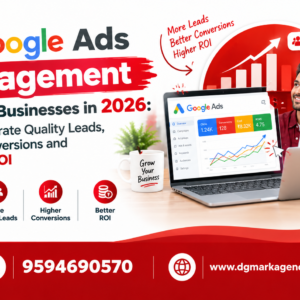
For small businesses, digital advertising in 2026 is no longer just about reaching more people online. It is about connecting with potential customers who are actively searching for products and services, understanding their requirements, and converting their interest into meaningful business opportunities. With growing competition across industries, Google Ads has become an important marketing channel for businesses looking to increase visibility, generate qualified enquiries, and attract customers. However, running advertisements without proper planning can lead to unnecessary spending, irrelevant clicks, and disappointing results.
Effective Google Ads Management for Small Businesses involves developing a strategy that connects advertising objectives with actual customer behaviour. From selecting relevant keywords and identifying suitable audiences to improving landing pages and monitoring conversions, every stage contributes to campaign performance. Small businesses must also understand how advertising budgets, automated bidding, artificial intelligence, and customer acquisition costs influence their return on investment. A well-managed campaign focuses on generating relevant enquiries rather than simply increasing website traffic.
DGmark Agency, a digital marketing company in Mumbai, offers Google Ads management alongside SEO, website development, social media marketing, and other digital marketing solutions. Its integrated approach helps businesses connect advertising strategies with their broader marketing objectives. This comprehensive guide explores how small businesses can improve Google Ads performance in 2026, manage advertising expenditure effectively, attract high-intent customers, and make informed decisions about professional campaign management.
What Is Google Ads Management and How Does It Work for Small Businesses?
Google Ads management is the strategic process of planning, implementing, monitoring, and refining paid advertising campaigns across Google’s advertising platform. It helps businesses reach potential customers based on search behaviour, relevant interests, and selected geographical locations. Unlike simply publishing an advertisement, professional campaign management focuses on making each advertising decision relevant to a defined business objective, such as generating enquiries, booking appointments, increasing purchases, or acquiring customers.
Essential Components of Google Ads Management
- Campaign strategy: Establish clear goals that reflect business requirements and customer acquisition priorities.
- Keyword research: Find search terms that indicate genuine interest in specific products or services.
- Audience identification: Select appropriate markets, locations, and customer segments.
- Advertisement development: Create relevant headlines, descriptions, and persuasive calls to action.
- Budget allocation: Distribute advertising expenditure according to campaign priorities.
- Conversion measurement: Track customer actions that contribute to business objectives.
- Performance improvement: Analyse results and make informed adjustments to advertising campaigns.
For small businesses, the value of Google Ads management lies in connecting advertising activity with measurable outcomes. A campaign targeting relevant searches can help attract potential buyers, while performance monitoring identifies whether those visitors become genuine enquiries. By combining keyword relevance, suitable advertisements, and reliable measurement, businesses can develop a more disciplined approach to paid customer acquisition.
Why Should Small Businesses Invest in Google Ads Management Services in 2026?
Small businesses frequently face the challenge of competing with established companies that already have strong brand recognition and substantial marketing budgets. Google Ads Management Services can provide opportunities to reach customers when they are actively looking for relevant solutions. However, professional management becomes particularly valuable when businesses need to improve campaign efficiency, avoid irrelevant traffic, and understand whether advertising expenditure supports actual business growth.
Important Benefits of Google Ads Management Services
- Search visibility: Advertisements can appear for relevant searches when campaigns meet eligibility requirements.
- Targeted customer reach: Businesses can focus on appropriate geographical markets and customer intentions.
- Budget flexibility: Campaign expenditure can be adjusted according to available resources.
- Lead generation opportunities: Relevant advertising can encourage enquiries, appointments, and calls.
- Measurable performance: Advertisers can evaluate clicks, conversions, acquisition costs, and attributed revenue.
- Campaign optimisation: Regular analysis helps identify opportunities to improve advertising efficiency.
- Competitive positioning: Smaller businesses can reach customers evaluating services from several providers.
In 2026, campaign management also involves understanding how automation affects advertising decisions. Businesses searching for a digital marketing agency in Andheri may benefit from combining local customer knowledge with campaign management expertise. The objective is to develop advertising activities that reflect genuine market demand while ensuring that budgets support measurable customer acquisition goals.
Is Google Ads Worth It for Small Businesses in 2026?
Google Ads can be a worthwhile investment for small businesses when customer demand, advertising costs, and expected revenue support a commercially viable campaign. The platform allows businesses to connect with users searching for specific services, but advertising visibility alone does not guarantee profitable results. Businesses need to evaluate whether the enquiries generated are relevant, whether their sales process can convert those enquiries, and whether customer acquisition costs remain financially sustainable.
Factors That Determine Google Ads Profitability
- Customer search demand: The target audience should actively search for related products or services.
- Business profit margins: Revenue from acquired customers should justify marketing and delivery costs.
- Market competition: Advertising auction conditions influence campaign expenditure.
- Customer lifetime value: Repeat purchases or long-term relationships may influence acceptable acquisition costs.
- Website effectiveness: A clear and trustworthy landing page can support conversion opportunities.
- Sales follow-up: Prompt responses help businesses make better use of incoming enquiries.
- Performance tracking: Reliable data makes it easier to assess advertising value.
The suitability of Google Ads also depends on the purchasing journey. Businesses offering high-value services may require fewer customers to recover advertising costs, while companies with lower transaction values may need greater conversion efficiency. Before making large investments, small businesses should establish acceptable acquisition costs and compare campaign results against those targets. Google Ads is most useful when advertising decisions are connected to profitability rather than traffic volume alone.
How Much Should a Small Business Spend on Google Ads in 2026?
Determining a Google Ads budget requires understanding the business’s customer acquisition objectives, available marketing resources, and expected advertising costs. There is no universally appropriate daily or monthly advertising budget because keyword prices, search competition, service locations, and customer conversion behaviour vary significantly between industries. Rather than selecting a budget based only on affordability, businesses should estimate how much spending may be necessary to gather useful performance information and pursue relevant customers.
Key Considerations for Google Ads Budget Planning
- Advertising objectives: Determine whether the primary goal involves calls, enquiries, appointments, or purchases.
- Keyword competition: Research expected click costs for commercially relevant searches.
- Target geography: Consider the size and competitiveness of selected advertising locations.
- Expected lead volume: Estimate how many enquiries are needed to meet business objectives.
- Conversion expectations: Review available website or campaign data to understand possible conversion rates.
- Testing requirements: Allocate sufficient resources to evaluate advertisements and targeting.
- Financial capacity: Select expenditure that remains manageable if early results are uncertain.
Small businesses should treat their initial budget as part of a controlled learning process. Campaigns can begin with a focused selection of services and relevant locations before expanding when performance evidence supports additional spending. Google Ads uses average daily budgets for many campaign types, meaning daily charges may fluctuate within applicable spending limits. A successful budget strategy is therefore based on ongoing evaluation rather than assuming that a particular spending amount will automatically generate a fixed number of leads.
What Is the Cost of Google Ads Management Services in India?
The cost of Google Ads Management Services in India depends on the scope of campaign management, advertising complexity, required technical support, and the amount of ongoing work involved. Agencies may charge fixed fees, calculate charges according to advertising expenditure, or provide customised service packages. It is important to distinguish the management fee paid to an agency from the amount paid directly for advertisement delivery, as these represent separate components of the total marketing investment.
Common Google Ads Management Pricing Structures
- Monthly retainer: A fixed recurring fee covering an agreed range of campaign management activities.
- Advertising spend percentage: Management charges calculated according to an agreed share of ad expenditure.
- Campaign setup fee: A one-time amount covering initial account structure, keyword research, and configuration.
- Project-based engagement: Specific charges for account audits, conversion tracking, or restructuring.
- Custom management agreement: Pricing based on campaign complexity, locations, services, and reporting requirements.
- Additional service charges: Separate costs for landing page development, creative production, or advanced analytics when not included.
Before hiring an agency, businesses should request a transparent explanation of deliverables and payment terms. The agreement should clarify account access, reporting responsibilities, conversion measurement, campaign optimisation, and whether additional website work is included. Comparing providers only on price may overlook important differences in service quality. A suitable management arrangement should provide clear accountability and support decisions based on advertising effectiveness rather than unsupported performance promises.
Which Google Ads Campaign Type Is Best for Small Business Lead Generation?
Google Ads provides different campaign types that support various stages of the customer journey. For small service-based businesses, Search campaigns are often a practical starting point because they can reach people expressing specific needs through Google searches. However, advertisers may also benefit from campaign formats that support product discovery, visual engagement, or additional conversion opportunities. The best choice depends on where customers are likely to engage with a business and which actions contribute to its objectives.
Google Ads Campaign Types to Consider
- Search campaigns: Reach users searching for relevant products, services, or solutions.
- Performance Max: Use Google’s automated systems to access multiple eligible advertising channels.
- Display campaigns: Present visual advertisements across eligible websites and applications.
- Video campaigns: Communicate services through video advertisements and storytelling.
- Demand Gen campaigns: Reach audiences through visually focused advertisements across eligible Google surfaces.
- Shopping campaigns: Promote eligible products using product information from a Merchant Center account.
Businesses should select campaign types according to customer intent and measurement capabilities. A professional service provider may prioritise searches indicating an immediate requirement, whereas a retail brand may benefit from product-focused advertising. Performance Max can be useful when appropriate conversion data and creative assets are available, but automation still requires monitoring. Instead of launching every campaign type simultaneously, businesses should begin with formats suited to their objectives and expand after evaluating results.
How Can Small Businesses Generate High-Quality Leads Through Google Ads?
High-quality lead generation means attracting enquiries from people who are genuinely interested in purchasing, booking, or discussing a relevant service. A campaign generating a large number of submissions may appear successful, but those enquiries have limited business value if they come from unsuitable prospects. Effective Google Ads Lead Generation therefore requires a combination of search intent analysis, accurate advertisement messaging, customer qualification, and performance measurement.
Strategies for Generating Qualified Google Ads Leads
- Define the ideal customer: Identify the audience most likely to benefit from the business’s services.
- Prioritise buying intent: Focus on search queries indicating commercial interest.
- Communicate service relevance: Clearly explain the advertised offering and intended customer.
- Use suitable landing pages: Direct visitors to content that answers their immediate questions.
- Improve enquiry forms: Collect information useful for identifying suitable prospects.
- Review lead sources: Determine which advertisements and keywords produce genuine opportunities.
- Connect CRM information: Analyse how advertising enquiries progress through the sales process.
- Maintain timely follow-up: Respond to relevant enquiries before customer interest declines.
Lead quality should influence decisions throughout the advertising process. If an advertisement attracts many visitors but few suitable customers, increasing its budget may simply generate more unproductive enquiries. By evaluating actual customer requirements and downstream sales outcomes, businesses can refine their targeting and messaging. This supports campaigns designed around commercial value instead of relying exclusively on conversion counts reported within the advertising platform.
How Do You Choose the Right Keywords and Target Audience for Google Ads?
Keyword selection determines how closely advertisements align with the searches potential customers perform. Effective keyword targeting requires more than identifying popular phrases. Businesses should consider the meaning behind searches, the stage of the purchasing journey, and the geographical areas where services are available. A relevant keyword strategy can attract qualified users while reducing exposure to unrelated searches that create unnecessary advertising expenditure.
Steps to Build an Effective Keyword and Audience Strategy
- Analyse search intent: Distinguish research-oriented searches from enquiries with clear commercial interest.
- Research relevant services: Select terms that accurately represent the business’s offerings.
- Use suitable match types: Understand how broad, phrase, and exact match keywords influence eligible searches.
- Include geographical relevance: Consider appropriate locality and city references where required.
- Develop negative keyword lists: Exclude irrelevant search patterns when supported by campaign evidence.
- Review search term reports: Identify queries contributing to valuable conversions or wasted spending.
- Evaluate device behaviour: Understand whether different devices produce different customer outcomes.
- Refine location settings: Check whether advertisements are reaching the intended market.
Geographical targeting becomes particularly important for service businesses operating within selected Mumbai locations. For instance, a business targeting Andheri and Borivali should align its advertisements with actual service coverage rather than assuming every Mumbai search is equally valuable. The most effective audience strategy combines keyword relevance with business suitability, location settings, and reliable conversion information.
How Can You Reduce Google Ads Costs Without Affecting Lead Quality?
Reducing Google Ads costs is not simply about achieving the lowest possible cost per click. An inexpensive visitor who never becomes a customer may provide less value than a higher-cost click from someone ready to purchase. Successful Google Ads Optimisation focuses on improving the quality of advertising interactions and identifying expenditure that does not contribute meaningfully to business objectives.
Practical Ways to Improve Advertising Cost Efficiency
- Identify irrelevant searches: Use search term information to discover unnecessary traffic.
- Refine negative keywords: Exclude queries that consistently fail to match business offerings.
- Improve advertisement relevance: Make headlines and descriptions consistent with user searches.
- Optimise landing pages: Reduce friction and make valuable actions easier to complete.
- Review geographical performance: Evaluate differences in lead quality across targeted areas.
- Assess bidding decisions: Select strategies appropriate for conversion volume and campaign goals.
- Prioritise valuable services: Focus spending on products or services with stronger commercial potential.
- Monitor qualified leads: Avoid evaluating campaign performance only through low-cost submissions.
Cost optimisation should be an ongoing analytical process rather than a series of aggressive budget reductions. Businesses need to understand the relationship between click costs, conversion rates, and eventual revenue. Campaign improvements become more meaningful when they reduce unproductive spending while preserving opportunities to attract valuable customers. Maintaining this balance is essential for achieving sustainable advertising efficiency.
Why Are Your Google Ads Getting Clicks but Not Generating Leads?
When advertisements generate clicks without enquiries, it usually indicates a problem somewhere between the initial search and the intended conversion action. The advertisement may attract unsuitable visitors, or users may leave because the landing page does not meet their expectations. In other cases, genuine enquiries may occur without being recorded correctly. Identifying the cause requires examining both advertising performance and the website experience.
Common Reasons for Clicks Without Conversions
- Poor search intent matching: Advertisements reach users who are not interested in making an enquiry.
- Misleading advertising messages: Visitors expect an offer or service that the website does not provide.
- Weak website content: Landing pages fail to answer important customer questions.
- Slow loading pages: Visitors abandon the website before exploring its services.
- Unclear calls to action: Users cannot easily identify how to contact the business.
- Complicated enquiry forms: Excessive information requirements discourage submissions.
- Mobile usability problems: Website elements may not function correctly on smartphones.
- Tracking inaccuracies: Conversion events may be missing, duplicated, or incorrectly configured.
Businesses should investigate these issues systematically before increasing their budgets. Reviewing actual search queries, checking the website on different devices, testing contact forms, and validating conversion tracking can reveal where potential customers are being lost. Correcting a landing page or tracking problem may improve results more effectively than changing bids without understanding the underlying issue.
How Can Landing Page Optimisation Improve Google Ads Conversion Rates?
Landing page optimisation focuses on improving the experience users receive after clicking an advertisement. A landing page should explain the relevant service, answer immediate customer questions, and make the next action straightforward. Even carefully targeted advertising may perform poorly when visitors reach a generic or confusing website page. Conversion-focused design connects the original search with information that helps customers make informed decisions.
Essential Landing Page Optimisation Practices
- Clear headline: Immediately communicate the primary service or offer.
- Advertisement consistency: Match website messaging with the advertisement that brought visitors.
- Relevant service details: Explain what customers can expect and who the offering is suitable for.
- Trust-building information: Present genuine reviews, qualifications, or verified business experience.
- Simple navigation: Avoid unnecessary distractions from the primary enquiry objective.
- Accessible contact options: Make forms, telephone numbers, or appointment actions easy to find.
- Mobile responsiveness: Ensure usability across different screen sizes.
- Performance testing: Evaluate headlines, forms, and page layouts using reliable data.
An effective landing page helps visitors feel confident that the business understands their requirements. Improving page clarity, removing unnecessary steps, and presenting relevant evidence can increase the likelihood of meaningful enquiries. Businesses should continually compare landing page behaviour with lead quality, because a higher conversion rate is only valuable when the additional enquiries are commercially relevant.
What Is Google Ads Conversion Tracking and Why Is It Important?
Google Ads Conversion Tracking allows advertisers to measure selected customer actions after advertising interactions. These actions may include completed enquiry forms, telephone calls, purchases, appointment bookings, or later sales recorded through a customer management system. Without dependable tracking, advertisers may struggle to understand which campaigns are delivering actual value and may make optimisation decisions based on incomplete information.
Important Conversion Tracking Methods
- Website conversion tags: Record selected actions completed on a business website.
- Google Tag Manager: Help manage supported tracking implementations and updates.
- Google Analytics integration: Provide additional information about website engagement and conversions.
- Call conversion tracking: Measure eligible telephone interactions associated with advertising.
- Enhanced conversions: Use appropriately collected first-party customer data to improve measurement.
- Offline conversion imports: Connect relevant advertising interactions with later CRM outcomes.
- Conversion value assignments: Help distinguish actions according to their relative business importance.
- Tracking verification: Check whether recorded conversions accurately reflect actual customer actions.
For businesses with longer sales cycles, measuring the first enquiry is only part of the process. A form submission may later become a qualified consultation, a proposal, or a completed sale. Connecting these stages enables more meaningful advertising evaluation. In 2026, Google’s enhanced conversion capabilities also support measurement using first-party information, subject to applicable privacy and consent requirements. Accurate tracking provides the foundation for informed bidding and campaign optimisation.
What Are the Most Common Google Ads Mistakes Small Businesses Should Avoid?
Small businesses can lose advertising efficiency when campaigns are launched without proper structure or monitored only occasionally. Many performance problems develop from avoidable decisions, such as targeting unsuitable keywords, neglecting conversion tracking, or interpreting clicks as evidence of sales success. Understanding common mistakes helps advertisers build campaigns that are more consistent, transparent, and aligned with their actual customer acquisition objectives.
Google Ads Mistakes That Can Reduce Campaign Performance
- Launching without clear goals: Creating campaigns before defining meaningful business outcomes.
- Using unrelated keywords: Attracting users whose requirements do not match available services.
- Ignoring negative keywords: Allowing unsuitable searches to consume campaign budgets.
- Relying on generic advertisements: Failing to explain what makes the service relevant.
- Using an unsuitable landing page: Directing visitors to content that does not answer their needs.
- Tracking the wrong conversions: Optimising campaigns around interactions with limited commercial value.
- Making frequent major changes: Preventing meaningful evaluation of recent adjustments.
- Ignoring sales feedback: Failing to identify which enquiries become genuine customers.
- Neglecting mobile functionality: Losing potential customers because website actions are difficult to complete.
- Expecting immediate profitability: Making premature conclusions before sufficient evidence is available.
Avoiding these mistakes requires a structured management process supported by regular analysis. Small businesses should document campaign objectives, verify technical settings, review customer enquiries, and assess performance trends. A disciplined approach reduces the risk of reactive changes and helps businesses allocate advertising resources according to evidence rather than assumptions.
How Do You Measure Google Ads ROI and Cost Per Lead?
Measuring Google Ads performance requires understanding how advertising expenditure contributes to business opportunities and revenue. Cost per lead helps businesses evaluate enquiry generation efficiency, while return on investment provides a broader picture of profitability. These measurements should not be confused with impressions, clicks, or other activity metrics, which provide useful context but do not independently demonstrate commercial success.
Important Metrics for Evaluating Google Ads Performance
- Cost per click (CPC): Average expenditure for each recorded advertisement click.
- Click-through rate (CTR): Percentage of advertisement impressions resulting in clicks.
- Conversion rate: Percentage of eligible advertising interactions producing measured conversions.
- Cost per lead (CPL): Advertising expenditure divided by the number of generated leads.
- Qualified cost per lead: Advertising expenditure divided by leads meeting defined qualification criteria.
- Customer acquisition cost (CAC): Total relevant acquisition expenses divided by newly acquired customers.
- Return on ad spend (ROAS): Revenue attributed to advertising divided by advertisement expenditure.
- Return on investment (ROI): Net financial return compared with the relevant total investment.
Cost per lead is calculated by dividing advertising expenditure by the number of leads generated. However, a low CPL is not automatically desirable if those enquiries rarely produce customers. Similarly, ROAS measures attributed revenue relative to advertising costs but does not account for every operating expense. Small businesses should evaluate acquisition costs, profit margins, management fees, and actual customer outcomes together to gain a more accurate view of marketing performance.
How Long Does It Take for Google Ads to Generate Leads and Deliver Results?
Google Ads campaigns can begin receiving impressions after they become eligible to serve, but the timeframe for generating qualified enquiries varies considerably. Search demand, competition, targeting accuracy, budgets, landing page effectiveness, and customer purchasing behaviour all influence results. Some campaigns may receive relevant enquiries relatively quickly, while others require additional testing before producing commercially useful performance information.
Factors Influencing Google Ads Results
- Industry demand: Advertising opportunities depend on how frequently customers search for relevant services.
- Keyword relevance: Accurate targeting improves the likelihood of reaching suitable prospects.
- Advertising competition: Auction conditions affect visibility and available traffic.
- Campaign budget: Spending levels influence the amount of traffic and data available for evaluation.
- Landing page quality: Website usability and messaging influence conversion behaviour.
- Bidding strategy: Automated bidding may require an adjustment period after important changes.
- Sales cycle length: Some services involve longer decision-making processes.
- Lead response quality: Business follow-up practices influence the conversion of enquiries into customers.
Instead of relying on fixed timelines, businesses should evaluate progress through campaign readiness, initial traffic quality, enquiry performance, and eventual sales outcomes. Major changes to bidding or conversion settings should also be assessed over suitable periods. A realistic Google Ads management approach prioritises learning from reliable data and improving campaign efficiency over time rather than guaranteeing immediate results.
How Is AI Changing Google Ads Management for Small Businesses in 2026?
Artificial intelligence increasingly influences how Google Ads evaluates advertising opportunities, adjusts bids, and delivers campaign assets. AI-powered features can process signals associated with user behaviour, context, and expected conversion outcomes. For small businesses, these capabilities may reduce some repetitive optimisation work and support more responsive advertising decisions. However, automated systems still depend on the quality of business objectives, creative information, and conversion data.
AI-Powered Capabilities in Google Ads
- Auction-time bidding: Automated systems evaluate relevant signals when determining bids.
- Conversion prediction: Machine learning supports estimates of likely customer actions.
- Audience expansion: Eligible campaign formats identify additional opportunities beyond manually selected audiences.
- Creative asset combinations: Automated systems may test different supported advertisement elements.
- Performance insights: Campaign reports and recommendations help identify potential optimisation opportunities.
- Value-based bidding: Automated strategies can consider assigned conversion values.
- Lead quality signals: Relevant CRM conversion information can support optimisation towards more meaningful customer outcomes.
AI should be considered a tool that supports professional judgement rather than a complete replacement for campaign expertise. If inaccurate or low-value conversions are used for optimisation, automation may prioritise unsuitable outcomes. Small businesses need to establish reliable measurement systems, provide appropriate campaign assets, and regularly review actual customer results. A combination of automation and human oversight creates a stronger foundation for responsible advertising decisions.
How Can Google Ads Smart Bidding and Performance Max Improve Campaign Results?
Smart Bidding and Performance Max use automation to help advertisers pursue selected campaign goals. Smart Bidding adjusts bids using auction-time signals, while Performance Max offers automated campaign delivery across eligible Google advertising channels. These tools can improve operational efficiency when campaigns have appropriate conversion goals, accurate tracking, and meaningful performance information. Their effectiveness should nevertheless be measured against actual business outcomes.
Key Smart Bidding and Performance Max Practices
- Maximise Conversions: Seek additional measured conversions within applicable campaign budget constraints.
- Target CPA: Work towards a specified average acquisition cost where the strategy is supported.
- Maximise Conversion Value: Prioritise greater total recorded conversion value.
- Target ROAS: Optimise towards a selected return on advertising expenditure where applicable.
- Audience signals: Supply relevant information to help guide automated campaign learning.
- Creative asset quality: Provide accurate and useful advertisement headlines, descriptions, and visuals.
- Conversion data accuracy: Ensure that automated systems receive meaningful performance signals.
- Ongoing monitoring: Review budget usage, conversion quality, and available campaign insights.
Google updated the naming of certain Smart Bidding strategies in 2026, so advertisers may encounter newer Target CPA and Target ROAS labels in their accounts. The underlying objective remains to support bidding around defined acquisition or return targets. Automated campaigns still require strategic decisions about acceptable costs, appropriate customer actions, and budget allocation. Performance Max should be evaluated alongside other campaign types rather than automatically replacing existing advertising strategies.
Should Small Businesses Manage Google Ads Themselves or Hire an Agency?
Small businesses can manage Google Ads internally when they have the necessary advertising knowledge, technical resources, and time to monitor campaigns. Independent management may provide direct oversight and reduce external service fees. However, campaigns involving several services, multiple locations, complex conversion tracking, or substantial expenditure often require more specialised attention. Choosing between internal management and an agency depends on the business’s capabilities and the importance of paid advertising within its overall marketing strategy.
Factors to Consider Before Making a Decision
- Internal expertise: Determine whether employees understand keyword research, bidding, and conversion optimisation.
- Available time: Consider whether campaigns can be monitored consistently alongside other responsibilities.
- Tracking knowledge: Assess the ability to configure and validate reliable conversion measurement.
- Campaign complexity: Evaluate the number of services, markets, and advertising formats involved.
- Financial resources: Compare the cost of internal work with external management charges.
- Reporting expectations: Decide how campaign outcomes will be analysed and communicated.
- Growth plans: Consider whether campaign management requirements are likely to increase.
- Account transparency: Ensure that business owners maintain appropriate advertising account access.
Professional management may provide access to specialised knowledge and structured reporting, but hiring an agency does not guarantee profitable campaigns. Businesses should assess whether external support can address genuine knowledge gaps and improve operational efficiency. A suitable arrangement should give the business visibility into advertising expenditure, campaign decisions, and performance results while maintaining clear ownership of relevant advertising assets.
How to Choose the Right Google Ads Agency in Mumbai for Your Business?
Selecting the right Google Ads agency involves evaluating its strategic approach, technical abilities, industry understanding, and commitment to transparent reporting. Businesses should look beyond promotional claims and determine whether an agency can explain how advertising activities connect with qualified enquiries and customer acquisition. For local businesses, geographical knowledge can be useful, but professional capability and measurable processes remain more important than office location alone.
Important Criteria for Choosing a Google Ads Agency
- Relevant experience: Assess familiarity with the industry, customer behaviour, and advertising objectives.
- Campaign planning: Understand how the agency identifies keywords, audiences, and suitable advertising formats.
- Conversion tracking: Confirm how enquiries and sales outcomes are measured.
- Budget transparency: Request a clear distinction between advertising expenditure and management charges.
- Performance reporting: Review how the agency communicates results and recommended improvements.
- Lead qualification approach: Ask whether campaign decisions consider genuine customer suitability.
- Landing page knowledge: Evaluate whether the agency understands website conversion requirements.
- Account access: Ensure the business retains appropriate visibility and control.
- Realistic expectations: Avoid agencies promising guaranteed leads or fixed profitability without supporting evidence.
A business comparing a digital marketing agency in Borivali with providers in other parts of Mumbai should focus on whether the agency understands its customers and can support specific marketing goals. Similarly, businesses considering a digital marketing agency in Andheri should review its advertising processes and reporting standards. The right agency should help business owners understand how their money is being spent and how campaign effectiveness is being evaluated.
Why Choose DGmark Agency for Google Ads Management Services?
DGmark Agency offers digital marketing services that support online visibility, customer acquisition, and business marketing objectives. Its service portfolio includes Google Ads, SEO, website development, social media marketing, and performance-focused digital marketing. Bringing these activities together can help businesses address both advertising performance and the wider customer experience, particularly when campaign results depend on relevant website content and effective enquiry processes.
Digital Marketing Services and Capabilities at DGmark Agency
- Google Ads management: Support campaign planning, advertising execution, and ongoing optimisation.
- Keyword and audience research: Identify relevant search opportunities and customer markets.
- Campaign budget management: Align advertising expenditure with defined objectives.
- Lead generation strategy: Focus on reaching users interested in relevant products or services.
- Website development: Support digital experiences that communicate business offerings.
- Search Engine Optimisation: Improve the foundation for organic search visibility.
- Social media marketing: Support brand communication and audience engagement.
- Performance analysis: Evaluate digital marketing activity against selected business goals.
For businesses seeking a digital marketing company in Mumbai, DGmark Agency provides a combination of paid advertising and broader digital marketing services. This integrated service offering can be useful when organisations need consistency between their advertisements, website messaging, and marketing objectives. Small businesses can evaluate DGmark Agency’s Google Ads services according to their industry requirements, target locations, available budgets, and expected customer acquisition outcomes.
Frequently Asked Questions (FAQs)
1. What Is Google Ads Management for Small Businesses?
Google Ads management involves creating, monitoring, and optimising paid advertising campaigns to reach relevant customers. It includes keyword research, audience targeting, bidding, conversion tracking, and performance analysis to support lead generation and business objectives.
2. How Much Should a Small Business Spend on Google Ads in India?
The suitable budget depends on advertising competition, keyword costs, service locations, and customer acquisition objectives. Businesses should begin with a financially manageable testing budget and adjust expenditure according to reliable campaign performance information.
3. Can Google Ads Generate Quality Leads for Small Businesses?
Yes. Google Ads can attract qualified enquiries when advertisements target relevant searches and direct visitors to suitable landing pages. Lead quality also depends on service relevance, customer qualification, tracking accuracy, and the business’s sales follow-up process.
4. Is Google Ads Better Than SEO for Lead Generation in 2026?
Google Ads can provide paid visibility when eligible campaigns start serving, while SEO aims to develop organic search visibility over time. Businesses may use both strategies together depending on their acquisition goals, available budgets, and marketing priorities.
5. What Is a Good Cost Per Lead in Google Ads?
A good cost per lead depends on the industry, customer value, profit margins, and lead-to-sale conversion rate. Businesses should assess whether enquiries become profitable customers rather than comparing costs against a universal benchmark.
6. Why Are My Google Ads Getting Clicks but No Conversions?
Common reasons include irrelevant keyword targeting, weak landing pages, slow website performance, unclear calls to action, complicated enquiry forms, and incorrect conversion tracking. Reviewing the complete customer journey can help identify the problem.
7. How Long Does Google Ads Take to Generate Results?
Google Ads may start generating traffic after eligible campaigns begin serving, but qualified lead generation timelines vary. Competition, budget, search demand, landing pages, and sales cycles influence performance. There is no guaranteed timeframe for profitable results.
8. Can Small Businesses Run Google Ads Without a Website?
Certain eligible Google Ads formats support lead forms or call-based enquiries without requiring a conventional website form. However, a well-designed website can provide useful service information, customer trust signals, and additional conversion opportunities.
9. How Can Google Ads AI and Smart Bidding Help Small Businesses?
AI-powered bidding can adjust advertising bids using signals associated with conversion likelihood or value. Small businesses may benefit from automation when campaigns have accurate conversion tracking, appropriate objectives, and sufficient performance information.
10. How Do I Choose a Google Ads Agency in Mumbai?
Evaluate the agency’s advertising experience, keyword strategy, conversion tracking capabilities, management fees, account transparency, and performance reporting. Select a provider that understands business goals and explains how campaign results will be measured.
Conclusion
Google Ads Management for Small Businesses in 2026 requires a clear understanding of customer search intent, advertising objectives, and campaign performance. Effective management involves selecting relevant keywords, developing compelling advertisements, choosing suitable targeting settings, and building conversion-focused landing pages. Businesses that consistently monitor lead quality and advertising expenditure can identify opportunities to improve campaign efficiency while reducing unnecessary costs. Instead of concentrating only on website traffic, small businesses should measure customer enquiries, acquisition costs, and their contribution to actual revenue.
The growing use of artificial intelligence and automated bidding has introduced additional opportunities for advertisers to manage campaigns using more sophisticated performance signals. However, these technologies are most useful when supported by reliable conversion tracking, meaningful business goals, and ongoing strategic oversight. Small businesses should avoid making major decisions based on short-term fluctuations and instead evaluate results through consistent performance measurement. Combining data-driven optimisation with an understanding of customer requirements can help businesses develop more financially responsible advertising strategies.
DGmark Agency, a digital marketing company in Mumbai, provides Google Ads management alongside SEO, website development, social media marketing, and integrated digital marketing services. For businesses looking to improve their digital advertising approach, selecting suitable campaign strategies and evaluating performance against clear objectives are important steps towards sustainable growth. With relevant targeting, effective budget management, accurate conversion measurement, and professional oversight, small businesses can work towards generating better-quality leads, improving customer acquisition, and maximising the value of their advertising investment.
Contact DGmark Agency Today!
DGmark Agency – Best Digital Marketing Agency in Andheri, Mumbai
Address– 405, 4th Floor, Pratik, Ratan Nagar Apartment-B Wing, Bus Stop, Near, Apna Bazar Rd, opp. Dhake Colony, D.N.Nagar, Andheri West, Mumbai, Maharashtra 400053
Phone no. – 9594690570
Website: https://dgmarkagency.com/